Wire Rope Electric Hoists for Steel Slabs, Coils & Molds
Check how wire rope electric hoists handle heavy steel slabs, coils, and molds safely and efficiently, ensuring reliable operations in modern steel plants.
Wire Rope Electric Hoists in Steel Plants: Efficient Handling of Heavy Slabs, Coils, and Molds
Most Important Takeaway
For steel plant operations, selecting the right wire rope electric hoist ensures safe, efficient, and reliable lifting of heavy slabs, coils, and molds, even in high-temperature, harsh industrial environments. Choosing a high-capacity hoist optimized for heavy-duty operations minimizes downtime, protects workers, and maximizes productivity.
Key Takeaways: What This Guide Solves
- How to handle extreme weights in slab yards and coil storage safely
- What makes a heavy-duty wire rope hoist suitable for steel plant applications
- How to ensure high lifting heights and precise positioning in harsh environments
- How to integrate wire rope hoists with overhead cranes for continuous casting, rolling mills, and coil handling
- Practical buyer considerations for capacity, speed, maintenance, and durability
Introduction
Wire rope electric hoists are essential in steel plants. They don’t just lift heavy loads—they keep production moving. In rolling mills, these hoists can lift slabs weighing 10–80 tons. In coil yards, they move large steel coils. And in continuous casting areas, they position heavy molds with precision. Without the right hoist, work slows down, equipment wears out faster, and safety risks increase.
Choosing the right wire rope electric hoist isn’t just about capacity. You need one that fits your lifting height, load frequency, and plant conditions. The right hoist ensures smooth, safe, and reliable operation every day.
Key Points:
- Capacity: 10–80 tons, for slabs, coils, and molds
- High lifting height: Can reach multiple levels in rolling mills or casting areas
- Precision control: Smooth lifting with anti-sway and safety brakes
- Durable design: Handles heat, dust, and vibrations in steel plants
Common questions from steel plant teams include:
- Which hoist is best for frequent heavy lifting?
- Can it work reliably in hot, dusty conditions?
- How do I reduce maintenance while handling large slabs safely?
This guide will answer these questions and show how wire rope electric hoists make steel plant operations more efficient and safe.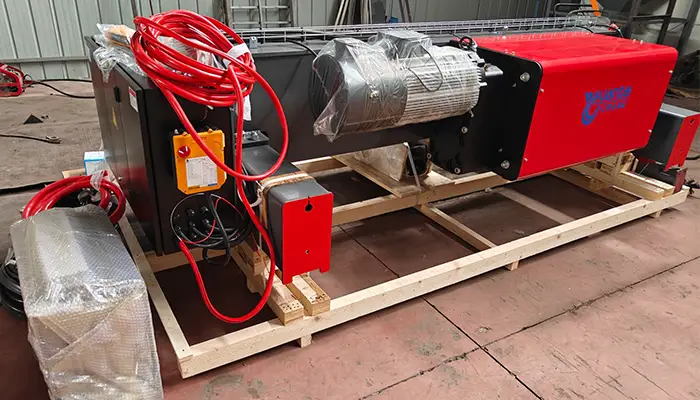
Features of High-Capacity Wire Rope Electric Hoists for Steel Plants
Wire rope electric hoists are essential for steel plants, offering reliable lifting of heavy loads under harsh industrial conditions. Their design ensures safety, precision, and long-term durability for demanding operations.
- Reinforced drums, gears, and wire ropes ensure a long service life
- Built to operate continuously in harsh conditions without frequent downtime
- Protects both the load and the crane system from excessive wear
- Overload protection prevents damage if the load exceeds the hoist rating
- Anti-sway mechanisms reduce load swinging for precise placement
- Emergency brakes provide extra safety in case of power failure or sudden stops
- Long wire ropes allow multi-story lifting and handling of tall molds or stacked slabs
- Dual-speed hoisting enables smooth positioning for delicate or heavy loads
- Supports integration with motorized trolleys for horizontal movement across long spans
- Industrial-grade motors, gearboxes, and wire ropes are built for minimal wear
- Routine inspections and spare part replacements are simple
- Reduces maintenance time and keeps production moving
Applications in Steel Plants
Wire rope electric hoists are widely used in steel plants to safely and efficiently handle heavy slabs, coils, and molds. Their durability and precision make them essential for modern steel operations.
- Enables precise positioning, reducing the risk of slab damage
- Supports continuous production without unnecessary delays
- Handles loads up to 80 tons, even in high-temperature areas
- Compatible with motorized trolleys and overhead crane systems for smooth horizontal movement
- Reduces the risk of accidents during coil handling
- Allows fast and organized handling in high-volume coil yards
- Supports repeated lifts without overloading the hoist
- Ensures precise placement, which reduces casting errors
- Minimizes downtime during mold changes or maintenance
- Can be used with long wire ropes for high lifting heights in multi-story casting lines
How to Select the Right Wire Rope Electric Hoist
Choosing the right wire rope electric hoist can make a big difference in steel plant operations. Picking a hoist that doesn't match your loads or environment can lead to downtime, safety issues, and higher maintenance costs. Here are the key factors to consider:
- Ensures safe operation under heavy-duty conditions
- Reduces risk of mechanical failure or overload
- Supports continuous handling of high-volume steel products
- Long wire ropes allow multi-story lifting without re-rigging
- Proper crane span alignment ensures smooth horizontal movement
- Supports fast and precise placement of heavy loads
- Protects motors, gears, and wire ropes from accelerated wear
- Maintains safe operation even in hot rolling mills or dusty coil yards
- Reduces unexpected downtime and maintenance costs
- Double girder hoists are better for heavier loads and longer spans
- Single girder hoists are more cost-effective for medium loads and shorter spans
- Ensures easy alignment with motorized trolleys and automation systems
- Simplifies inspections and routine servicing
- Reduces downtime and production loss
- Extends the life of the hoist and crane system
Advantages of Wire Rope Electric Hoists in Steel Operations
Wire rope electric hoists offer several practical benefits for steel plants. They are not just lifting machines—they are key to keeping production smooth, safe, and efficient. Choosing the right hoist can improve operations and reduce risks for both operators and equipment.
- Reduces the risk of material damage or workplace injury
- Supports consistent handling of high-volume steel products
- Ideal for both slab yards and rolling mills
- Long wire ropes allow multi-story lifting
- Can cover long crane spans without affecting stability
- Works with motorized trolleys for smooth horizontal movement
- Ensures continuous operations in demanding environments
- Reduces downtime caused by equipment failure
- Maintains safe, predictable lifting performance
- Works with single or double girder overhead cranes
- Supports automation and motorized trolley systems
- Enables precise placement of slabs, coils, or molds
- Simplifies routine inspections and spare part replacement
- Protects motors, gearboxes, and wire ropes from overuse
- Keeps operations running smoothly and safely
Conclusion
Wire rope electric hoists are essential equipment in steel plants, especially when handling heavy slabs, steel coils, and casting molds. Choosing the right hoist means looking at capacity, lifting height, durability, and how well it integrates with your existing overhead crane system.
A properly selected and well-maintained hoist keeps operations smooth and safe, reduces downtime, and protects both workers and equipment. In the long run, investing in a reliable wire rope electric hoist improves productivity and ensures that your steel plant can run efficiently for years to come.
- Supports heavy-duty lifting safely and reliably
- Adapts to high lifting heights and long crane spans
- Reduces equipment wear and minimizes production interruptions
- Protects operators while maximizing plant productivity